

When suppliers talk about EULYNX compliance, they usually mean object controllers. For a point, signal or train detection controller, the path is clear: the EULYNX Conformance Test Plan1 defines the process, a qualified laboratory runs the official test catalog, and the resulting report supports a declaration of conformity.
For interlockings, it is different. In our recent discussions with interlocking suppliers, one question keeps coming up: what exactly does “EULYNX compliant” mean for our interlocking, and how do we show it?
What conformance testing gives an object controller
It is worth looking first at what an object controller supplier gets from the official process, because it explains what is at stake for the interlocking.
A supplier brings the product to an EULYNX test laboratory. The laboratory connects it to a hardware-in-the-loop test frame, runs the test cases from the EULYNX test catalog, and checks the physical and electrical properties the specifications define. The results are recorded in a laboratory test report, which the supplier can use to support a declaration of conformity.
The value lies in what happens afterwards. According to the Conformance Test Plan, infrastructure managers and their safety authorities can then focus on how the product is used in their own railway, without re-examining the EULYNX functions. And the supplier can take the same product to other markets without having its EULYNX part examined again. One test campaign serves many projects.
Interlockings are outside the conformance test process
For the interlocking, the same plan has one sentence: interlocking products that implement EULYNX interfaces “are not subject to the EULYNX conformance test process.”
The reason is understandable. Object controllers are specified with generic functionality that applies to every infrastructure manager. Interlockings are not. Their core logic, such as how routes are set, locked and released, follows national rules, and EULYNX only defines the minimum requirements for their interfaces. Testing an interlocking against every infrastructure manager’s variant at once is, in the plan’s words, something that “may not be technically feasible.”
The test catalog reflects this. Baseline Set 4 Release 4 contains around 330 test cases, all for field elements. The few generic test cases for the link between the interlocking and adjacent systems, such as the Radio Block Centre, were removed in the March 2026 update. EULYNX plans to extend conformance testing to the interlocking in a later phase, but for now, there is no official test an interlocking can pass, and no laboratory report it can carry from one project to the next.
What an interlocking still must comply with
Being outside the test process does not mean being outside the standard. The interlocking takes part in every EULYNX signaling interface, and on each of them it has a defined role.
Toward the field. On the link to a point (SCI-P), signal (SCI-LS), train detection (SCI-TDS), level crossing (SCI-LC), or IO controller (SCI-IO), the interlocking is the primary communication partner: nothing happens until it acts. It starts by asking the controller which protocol version it speaks. The controller answers, together with a checksum of its configuration data, and the interlocking compares that checksum with its own. Only if both match does it request initialization, after which the controller reports its complete status, such as the current position of a point, and the connection is established. All of this has to happen within a configured time, and every telegram error, unexpected message or loss of connection has a defined reaction. What the interlocking then does with a point that fails to move or a signal that shows the wrong aspect is left to national specifications, but the conversation itself is standardized.
Toward neighboring interlockings. SCI-ILS connects two interlockings that meet at a boundary. The specification describes it as an interface between two equal partners, possibly from different suppliers. Over it, the two interlockings set routes across their common boundary and keep each other informed about track occupancy, signals, flank protection and line direction. A legacy interlocking at the other end has to speak SCI-ILS too.
Toward the Radio Block Centre and traffic control. Over SCI-RBC, the interlocking reports the state of routes, signals, points and track sections, which the Radio Block Centre relies on to issue movement authorities to trains. Over SCI-CC, it exposes its operational functions to traffic control: the commands an operator can give, and the status information sent back.
One standard, many variants
There is one more aspect that shapes interlocking compliance in practice. In the EULYNX specifications, each requirement carries an applicability marking: either “Default”, meaning it applies to all infrastructure managers, or the codes of the specific infrastructure managers it applies to. On SCI-ILS, a significant part of the route, direction and flank protection behavior is marked for some infrastructure managers and not others, and the interface is split into a common part and a national part. Where two interlockings belong to different infrastructure managers, at a border for example, the two have to agree on a harmonized set of requirements for that boundary.
For an interlocking, “EULYNX compliant” therefore always means a specific baseline, a specific set of interfaces and a specific infrastructure manager’s variant.
What this means for your project
The official catalog covers only the object controller side of each interface. For the interlocking side, the work a laboratory does for an object controller falls to the supplier and the infrastructure manager. In our experience, four questions need answers, and the earlier they are settled, the less they cost.
Defining the scope. The first task is to write down what “compliant” means for this product. That covers the interfaces it implements: only the field-side interfaces, or also SCI-ILS, SCI-RBC, SCI-CC and SCI-LX. It covers the baseline and release, the infrastructure manager’s applicability and any national parts. It also covers what sits around the interfaces: the communication stack and network architecture toward each partner, and the service interfaces for diagnostics, maintenance and security, where EULYNX notes that some requirements for the interlocking are still to be developed. A scope that is not written down tends to be discovered at integration.
Building the evidence. The official catalog offers a useful benchmark. Its test cases are derived from the requirement specifications, with at least one test case for every sequence diagram and a link to the state machines behind them. Evidence for an interlocking deserves the same discipline, applied to the interlocking’s side of each interface and traceable to the EULYNX requirement identifiers. It has to cover the normal sequences and, above all, the fault situations: version and checksum mismatches, timeouts, malformed telegrams, lost connections and resets. These are the cases that are hardest to reproduce and most likely to surface late. And since an interlocking can only be exercised against something that plays the other end, every partner in scope, whether object controllers, neighboring interlockings, the Radio Block Centre or traffic control, needs a counterpart in the test setup.
Agreeing on it. The supplier and infrastructure manager need a shared view of what is sufficient, and the assessor needs to be able to follow it. The Conformance Test Plan’s own rules are a reasonable starting point: deviations in vital or safety-related functions block acceptance, while a small number of non-vital deviations can be accepted if they are listed and justified. Settling such rules before the contract avoids negotiating them at integration, when every change is expensive.
Keeping it valid. EULYNX evolves. New releases bring error corrections and change requests, and Baseline Set 4 explicitly does not include automatic backwards compatibility. When the infrastructure manager moves to a new release, the evidence for an interlocking has to follow. The same applies when a product built for one infrastructure manager is offered to another.
That last point is where most of the cost lies. If the evidence is built project by project, the EULYNX part is demonstrated again every time, even though most of it has not changed. Unlike an object controller with its laboratory report, an interlocking supplier entering a new market starts the demonstration again for that market’s variant. Structuring the evidence the way EULYNX structures its specifications, with a common part and a variant-specific part, is what makes it reusable.
Prover’s role
We have spent decades verifying interlockings for systems in service around the world and producing the safety evidence that SIL 4 projects require. That experience shapes how we look at EULYNX: the interlocking is where the safety logic lives, and its interfaces are where that logic meets the rest of the system.
We believe interlocking compliance can be handled as systematically as object controller conformance. Testing every variant at once may not be feasible, but that is an argument against a single catalog, not against a generic approach. What we are working toward is one approach for any interlocking, configured for the baseline, interfaces and variant at hand. In practice, that means:
- The scope becomes a configuration. Interfaces, baseline and applicability are chosen, not rediscovered on each project.
- The evidence follows the specification. It covers the interlocking’s side of each interface, in normal operation and in fault situations, and traces back to the EULYNX requirements.
- The common part is reused. Moving to a new release or a new infrastructure manager means updating what changed, not starting again.
On that basis, we offer three services for interlocking interfaces:
Compliance evaluation. For suppliers and infrastructure managers, we verify that a given interlocking interface is EULYNX compliant for the target baseline and variant. The evaluation covers the interlocking’s side of each interface, in normal operation and in fault situations, and provides the evidence to show it.
Test-suite generation. The official catalog contains no tests for the interlocking. We produce them for the interlocking’s side of each interface in scope, in the same format as the official test cases, so they can be run in the same kind of test setup.
Compliant adapters. For suppliers adapting an existing interlocking, we start from the product as it is: what its current interfaces do, and how far they are from EULYNX for the target baseline and variant. We then develop adapters that bring those interfaces to EULYNX, so that as much of the established interlocking logic as possible can stay as it is.
Around these services, we help define the compliance scope, support the discussion with the infrastructure manager and the assessor, and, when the baseline changes or a new market comes into view, help update the evidence rather than rebuild it.
Whether you supply interlockings, procure them or assess them, the question of what EULYNX compliance means for your interlocking is worth settling early. If you need help evaluating your interlocking’s EULYNX compliance, generating the tests for its interfaces, or adapting your existing interlocking to EULYNX, feel free to book a meeting with us.
Share this article

Learn to build a solid safety case for rail control systems using formal verification
Fill out your information here.
More News & Articles
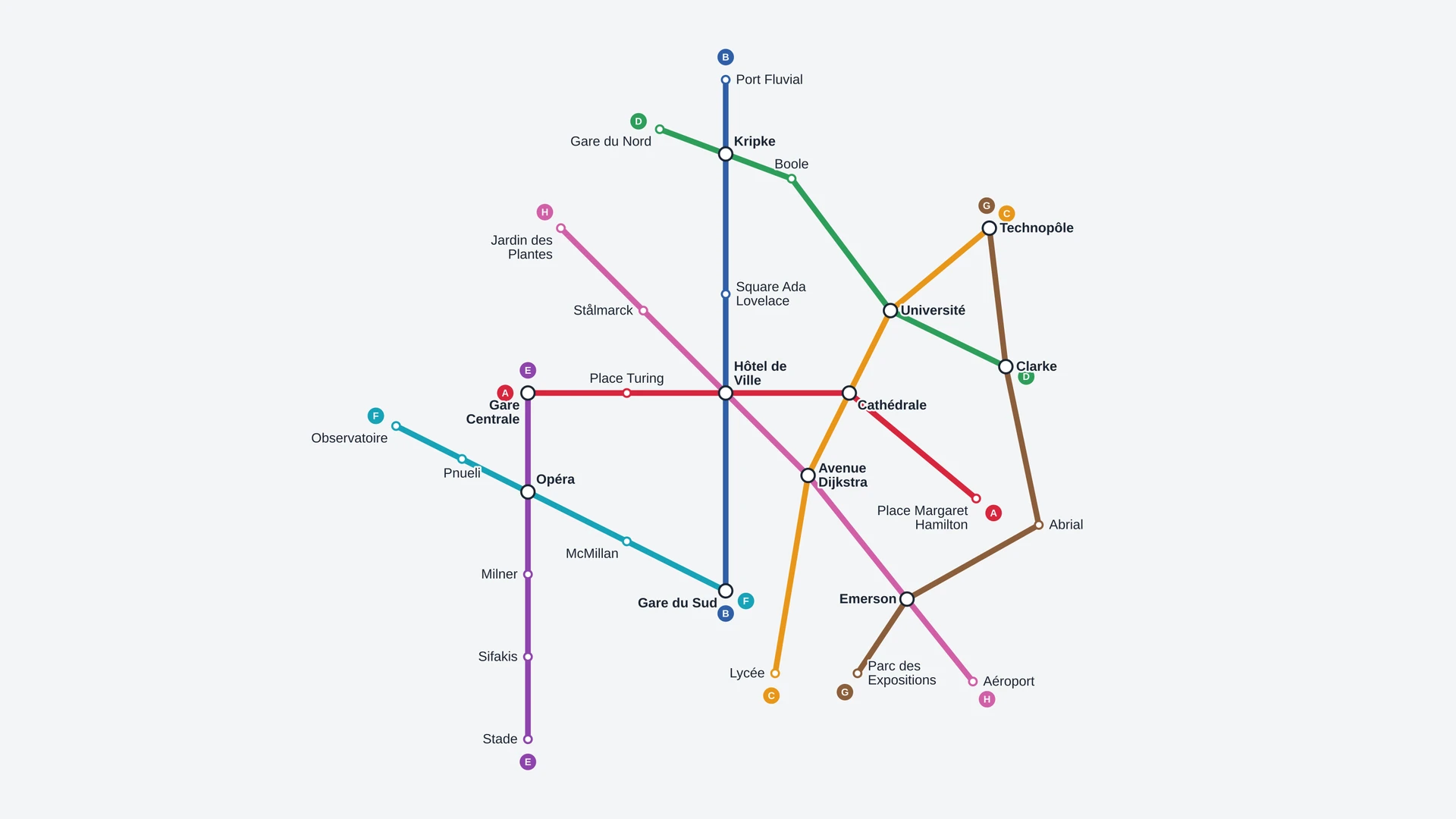
For the fifth year running, Prover supervised 33 CentraleSupélec engineering students as they designed, proved and tested the signaling software for a complete metro network, all in one week with Prover iLock and Prover Studio.

At ISoLA 2026 in Kos, Greece, Prover presented three papers on railway signaling: two from the ForTeS project on formal verification and testing of EULYNX specifications with Prover PSL, and one on validating architectural variants of ETCS trackside systems in a single ontology-driven framework.

When replacing relay interlockings, most conversations start with technology. The better starting point is governance: how do you make sure you can still change parts of the system 20 years from now? We look at what Open Signaling means in practice, and how our Stockholm Metro pilot was designed for replaceability from day one.


 +46 (0)8 617 68 00