Prover, RATP and Systerel publish unified HLL 4.0 specification
Prover, RATP and Systerel publish the unified HLL 4.0 specification, keeping the rail industry's formal verification language open and free of dialects.


Formal methods are essential in rail control, ensuring safe and reliable signaling and control systems. Mathematical verification minimizes the risk of errors and delays, while enhancing efficiency and reducing maintenance costs. Adopting formal methods in rail control enhances safety, reliability, and compliance. Read more about formal methods here.
Prover, RATP and Systerel publish the unified HLL 4.0 specification, keeping the rail industry's formal verification language open and free of dialects.

Generative AI has entered railway software engineering ahead of the standards governing it. A new CENELEC draft amendment to EN 50716 doesn't add requirements. It clarifies which existing rules apply when AI drafts specs, writes code, or generates test cases, and why those rules are harder to satisfy with generative models than teams might assume.

EULYNX standardizes rail signaling interfaces, but not the assurance behind them. Here's how formal methods close that gap, with exhaustive proof, generated test suites, and verified wrappers.

EN 50716 (the successor to EN 50128/EN 50657) sets the software development and verification expectations for railway applications, clarifying how formal methods and tool qualification contribute to a robust safety case. This session takes a practitioner’s view of applying that framework to real systems and on‑board functions.

With recent advances in AI, we can make SDA more accessible to the rail control community.Our goal is to simplify SDA and Formal Methods, and in this webinar, we will demonstrate how AI enables us to achieve this.

Watch the expert-led session to discover how Formal Safety Verification helps eliminate safety risks early and ensure CENELEC-compliant rail systems.

Prover and Stockholm Public Transport is launching a project to create a model-based environment for traffic control systems. By integrating digital twins and simulation tools, the initiative will improve control, reduce risk, and enable better, data-driven decisions across the organization.

Joint webinar with Prover & Cactus Rail. Succeed with migrations of old signaling and traffic management systems.

Discover how reachability analysis enhances formal verification by ensuring realistic scenarios and validating safety requirements in railway signaling systems. Learn about key techniques, including proof coverage, constraints softening, and early-stage validation, and explore how our tools make this process more efficient.

Explore how Prover is revolutionizing railway signaling with AI and formal methods. Discover Prover Labs: a hub for innovation, collaboration, and shaping AI-driven automation for enhanced safety, efficiency, and precision in signaling design.
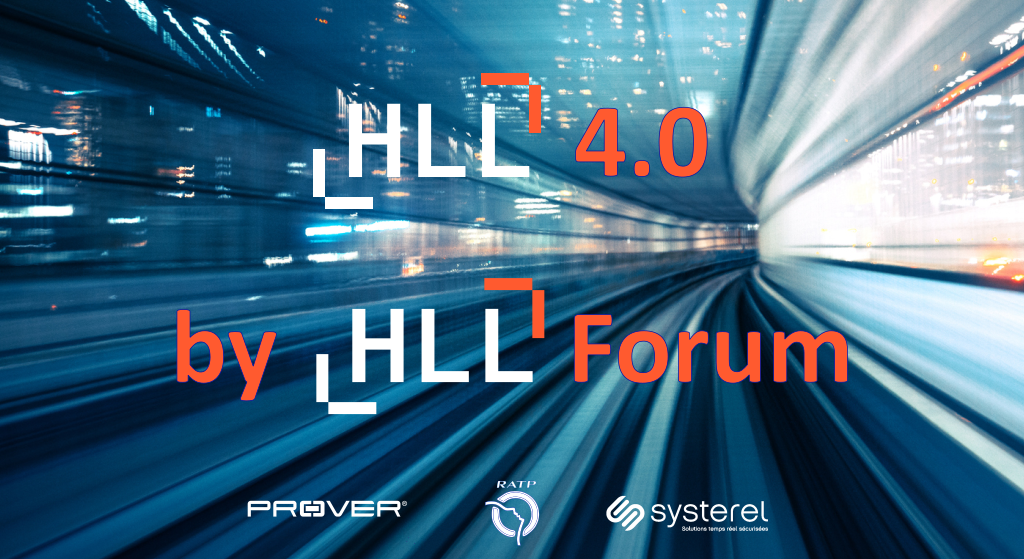
Prover, RATP and Systerel publish the unified HLL 4.0 specification, keeping the rail industry's formal verification language open and free of dialects.

Generative AI has entered railway software engineering ahead of the standards governing it. A new CENELEC draft amendment to EN 50716 doesn't add requirements. It clarifies which existing rules apply when AI drafts specs, writes code, or generates test cases, and why those rules are harder to satisfy with generative models than teams might assume.

EULYNX standardizes rail signaling interfaces, but not the assurance behind them. Here's how formal methods close that gap, with exhaustive proof, generated test suites, and verified wrappers.

EN 50716 (the successor to EN 50128/EN 50657) sets the software development and verification expectations for railway applications, clarifying how formal methods and tool qualification contribute to a robust safety case. This session takes a practitioner’s view of applying that framework to real systems and on‑board functions.

With recent advances in AI, we can make SDA more accessible to the rail control community.Our goal is to simplify SDA and Formal Methods, and in this webinar, we will demonstrate how AI enables us to achieve this.

Watch the expert-led session to discover how Formal Safety Verification helps eliminate safety risks early and ensure CENELEC-compliant rail systems.

Prover and Stockholm Public Transport is launching a project to create a model-based environment for traffic control systems. By integrating digital twins and simulation tools, the initiative will improve control, reduce risk, and enable better, data-driven decisions across the organization.

Joint webinar with Prover & Cactus Rail. Succeed with migrations of old signaling and traffic management systems.

Discover how reachability analysis enhances formal verification by ensuring realistic scenarios and validating safety requirements in railway signaling systems. Learn about key techniques, including proof coverage, constraints softening, and early-stage validation, and explore how our tools make this process more efficient.

Explore how Prover is revolutionizing railway signaling with AI and formal methods. Discover Prover Labs: a hub for innovation, collaboration, and shaping AI-driven automation for enhanced safety, efficiency, and precision in signaling design.
Fill out your information here.
Explore the railway solutions, start with a focused engagement, or discuss how Prover can support your functional safety lifecycle.
And 100% secure system.





© 2026 Prover Technology AB All Rights Reserved
© 2026 Prover All Rights Reserved


